
Viral Fever Season: What to Eat, What to Avoid & How to Recover Naturally
By TheVedaFuel – Nutrition, Yoga & Natural Wellness
Seasonal changes and monsoon weather often bring an increase in fever, cold, cough, body aches, weakness and flu-like infections.
During this time, our body needs more than just medicines and rest. Proper hydration, easily digestible food and adequate nutrition can play an important role in supporting recovery.
Food cannot cure a viral infection, but the right diet can help your body stay hydrated, maintain energy and recover from illness more comfortably.
Why Do We Feel So Weak During Viral Fever?
When the body is fighting an infection, appetite often decreases while the body’s demand for fluids and nutrients may increase.
Fever may lead to:
- Loss of appetite
- Dehydration
- Body weakness
- Headache
- Muscle aches
- Low energy
- Digestive discomfort
This is why your recovery diet should be light, nourishing and easy to digest.
1. Start With Hydration

Hydration should be one of the first priorities during fever.
Drink small amounts regularly rather than forcing large quantities at once.
Good options include:
Warm water
Helps maintain hydration and may feel soothing when you have a sore throat or congestion.
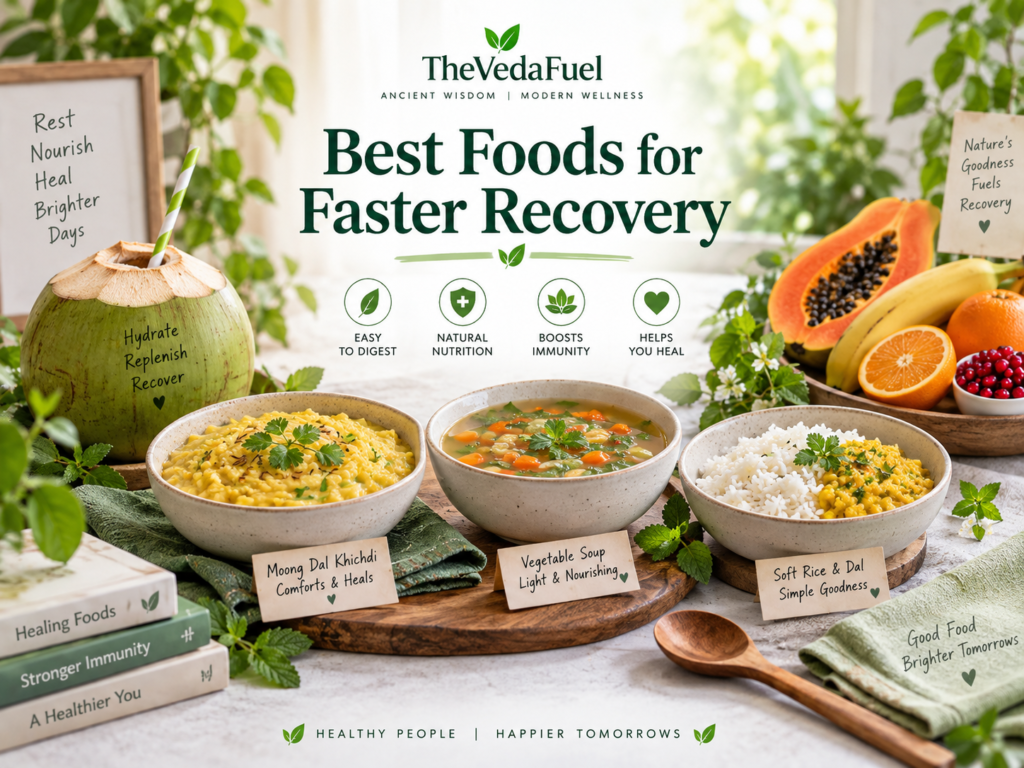
Coconut water
Provides fluids along with naturally occurring electrolytes.
Homemade soups
Vegetable soup, dal soup or light clear soup can provide both hydration and nutrition.
ORS when advised
If there is significant fluid loss due to vomiting, loose motions or poor intake, an oral rehydration solution may be useful.
Do not rely only on juices or sugary beverages for hydration.
2. Choose Light, Easy-to-Digest Meals
During fever, this is not the time for very heavy meals.
Try smaller portions every few hours according to your appetite.
Moong Dal Khichdi
One of the simplest Indian recovery meals.
Moong dal khichdi provides carbohydrates and protein while remaining relatively easy to digest.
You can prepare it with very little oil and mild spices.
Soft Rice and Dal
Soft-cooked rice with thin dal can be comforting when appetite is low.
Vegetable Dalia
Dalia cooked with vegetables can provide carbohydrates, fibre and micronutrients without making the meal too heavy.
Idli
Soft idli with mild sambar can also be a good light meal when tolerated.
3. Don’t Forget Protein
People often eat only biscuits, tea and rice during illness.
But protein is important for maintaining body tissues and supporting recovery.
Vegetarian protein options include:
- Moong dal
- Masoor dal
- Curd, if tolerated
- Paneer in small amounts
- Milk, if tolerated
- Soft-cooked lentils
- Besan
- Soy or tofu
Instead of consuming one large protein-rich meal, spread small portions throughout the day.
4. Add Vitamin-C-Rich Foods
Vitamin C supports normal immune function.
Indian food options include:
Amla: One of the richest commonly available natural sources of vitamin C.
Guava: Nutritious and naturally high in vitamin C.
Orange and sweet lime: Can be included if they do not irritate your throat or stomach.
Lemon: Add a small amount to water, soup or food.
Remember: vitamin C supports nutrition and immunity, but it should not be promoted as a cure for viral fever.
5. Include Colourful Fruits and Vegetables
During recovery, include a variety of vegetables and fruits whenever your appetite allows.
Try:
Papaya, apple, pomegranate, banana, carrots, pumpkin, spinach, bottle gourd and seasonal vegetables.
Different coloured plant foods provide different vitamins, minerals and antioxidant compounds.
Instead of searching for one “miracle immunity food”, focus on an overall balanced diet.
6. Try a Simple Ginger-Tulsi Drink
For adults who tolerate these ingredients, a mild homemade drink can be comforting.
Boil:
1 cup water
2–3 tulsi leaves
A small piece of ginger
Simmer for a few minutes and drink warm.
Avoid making extremely concentrated herbal mixtures.
Natural does not automatically mean that unlimited quantities are safe.
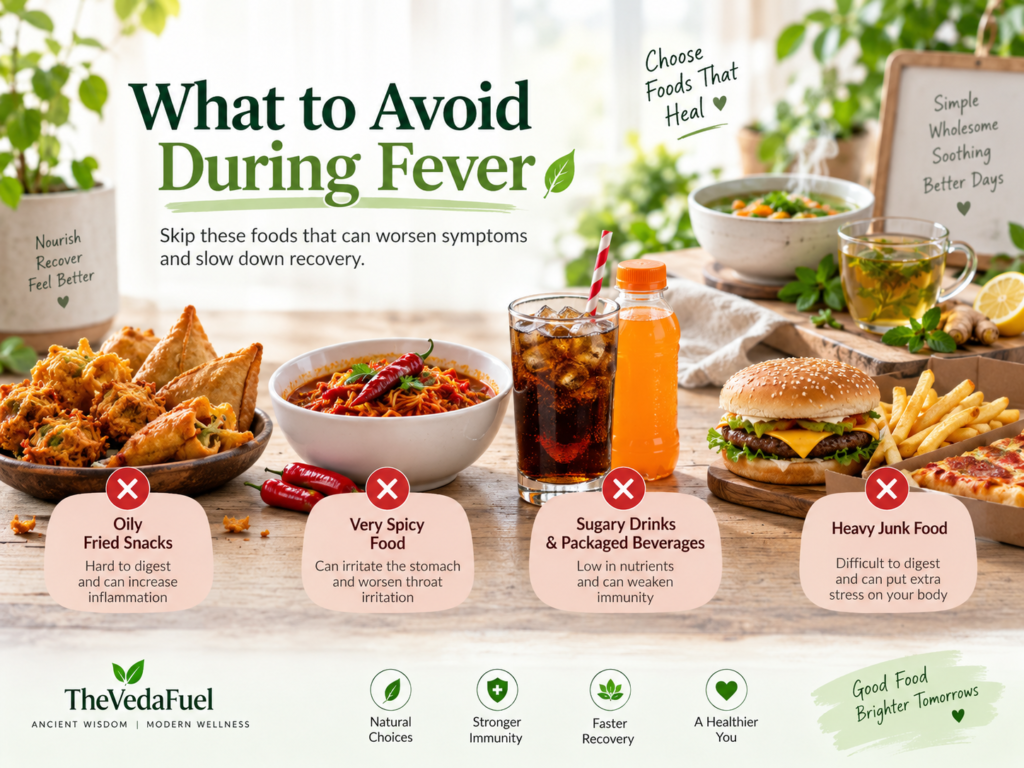
7. What Should You Avoid During Fever?
Try to limit:
Very oily and fried foods
They may feel heavy when digestion and appetite are already affected.
Excessively spicy food
It may aggravate nausea, acidity or throat irritation.
Packaged sugary drinks
They provide a lot of sugar without much useful nutrition.
Alcohol
It may worsen dehydration and can interact with medications.
Unnecessary supplements or herbal remedies
Do not take multiple supplements simply because they are marketed as “immunity boosters.”
A Simple One-Day Recovery Diet
Early Morning
Warm water
Breakfast
Vegetable dalia / soft poha / idli
Mid-Morning
Coconut water or a suitable fruit
Lunch
Moong dal khichdi + cooked vegetables
Evening
Light vegetable soup or herbal drink
Dinner
Soft rice with dal / vegetable khichdi
Before Bed
Warm water or milk if personally tolerated
Portion size should depend on appetite, age, medical conditions and severity of illness.
Rest Is Part of Recovery
Nutrition alone is not enough.
Your body also needs adequate sleep and rest.
Avoid intense exercise and strenuous yoga while you have an active fever.
Once the fever has resolved and your energy begins returning, gradually resume normal activity.
Gentle breathing exercises may be restarted when you feel comfortable, but intense pranayama or exercise should be avoided during acute illness.
Don’t Assume Every Fever Is “Just Viral”
Many illnesses can initially look similar.
Fever may be related to influenza, dengue, malaria, typhoid, COVID-19 or other infections.
Seek medical advice especially when fever is persistent or accompanied by symptoms such as:
- Difficulty breathing
- Persistent vomiting
- Severe weakness
- Confusion or unusual drowsiness
- Severe abdominal pain
- Bleeding
- Signs of dehydration
- Symptoms that are rapidly worsening
Children, older adults, pregnant women and people with chronic medical conditions may need medical attention sooner.
Do not self-diagnose dengue or start antibiotics without medical advice.
TheVedaFuel Wellness Tip
There is no single drink, fruit or supplement that can magically boost immunity overnight.
Strong immunity is supported by everyday habits:
Balanced nutrition + good hydration + sufficient protein + quality sleep + regular physical activity + stress management.
Small healthy habits followed consistently are more valuable than extreme detoxes or quick fixes.
Final Thoughts
During viral fever season, keep your diet simple.
Hydrate well. Eat light meals. Include protein. Choose fruits and vegetables. Rest properly.
Most importantly, listen to your body and seek medical advice when symptoms are severe or persistent.
Need a Personalised Diet Plan?
Every person’s nutritional needs are different.
TheVedaFuel provides personalised nutrition and wellness guidance based on your lifestyle, food preferences and health goals.
Eat Better • Live Better • Heal Naturally
This article is for general educational purposes and does not replace diagnosis or treatment from a qualified medical profession
Pingback: Japanese Tofu Teriyaki Buddha Bowl - The Veda Fuel