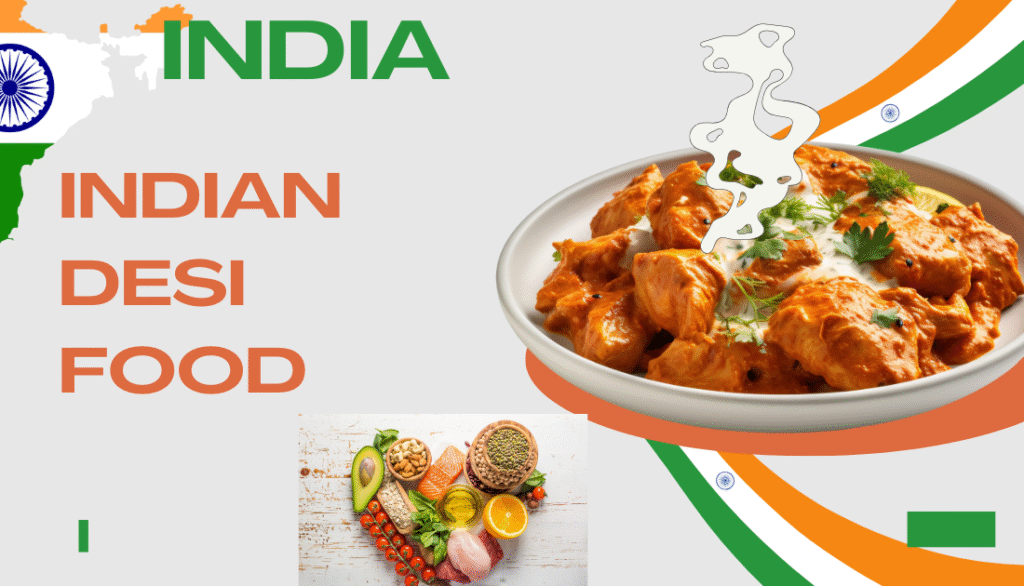
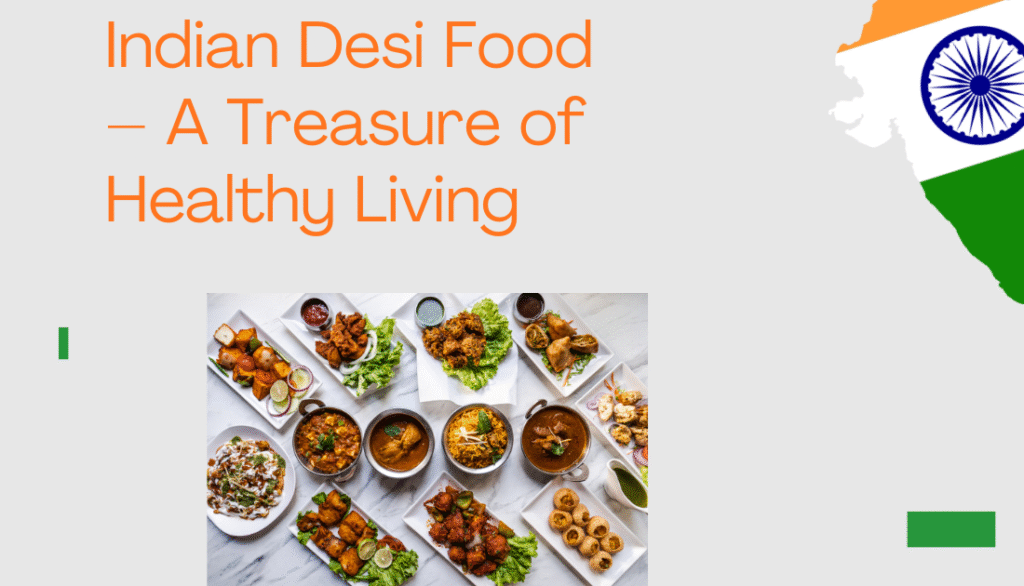
When it comes to health and wellness, many people look towards Western diets, smoothies, or supplements. But the truth is, India already has a rich heritage of wholesome, balanced, and healing food that we lovingly call desi food. From dal-chawal to roti-sabzi, from curd rice to khichdi – our traditional meals are packed with nutrients, taste, and the wisdom of Ayurveda.
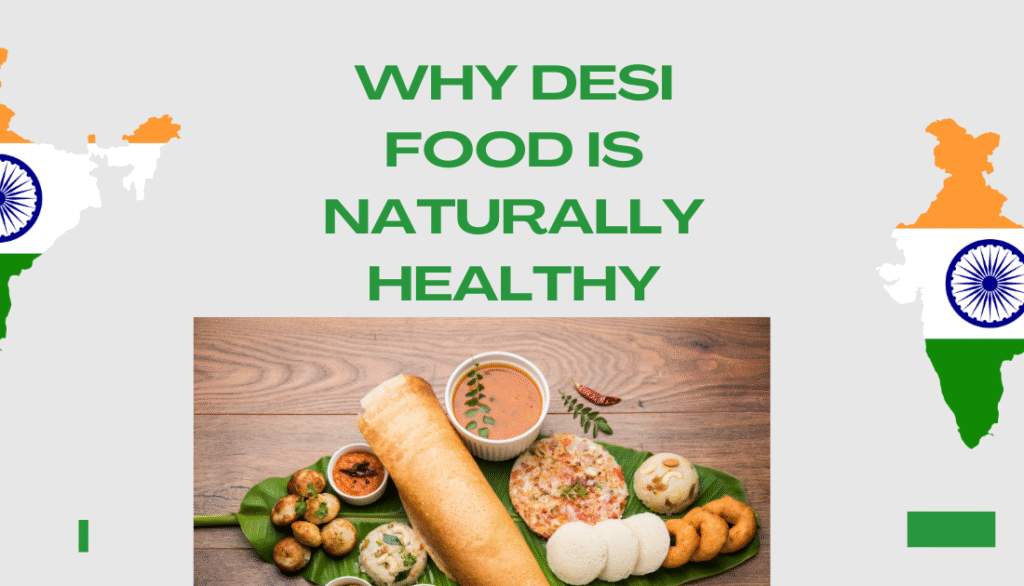
Why Desi Food is Naturally Healthy
- Balanced Nutrition
Indian meals usually combine carbohydrates (rice/roti), proteins (dal/pulses), healthy fats (ghee, oils, nuts), and fiber (sabzi, salad, chutneys) in a single thali. This balance keeps us energized and satisfied. - Seasonal & Local Ingredients
Desi food is prepared using seasonal vegetables, grains, and spices that suit the climate and our body’s needs. For example, buttermilk in summer cools the body, while bajra roti in winter provides warmth. - Ayurvedic Wisdom in Everyday Cooking
Our spices are not just for taste – turmeric, cumin, coriander, ginger, garlic, and ajwain have medicinal properties. They help in digestion, immunity, and detoxification. - Gut-Friendly Practices
Indian diets include natural probiotics like curd, chaas, fermented foods like idli, dosa, and pickles, which improve gut health. - Mindful Eating Habits
Traditionally, desi food is eaten sitting down, with gratitude, often using hands – making the act of eating a mindful and holistic experience.
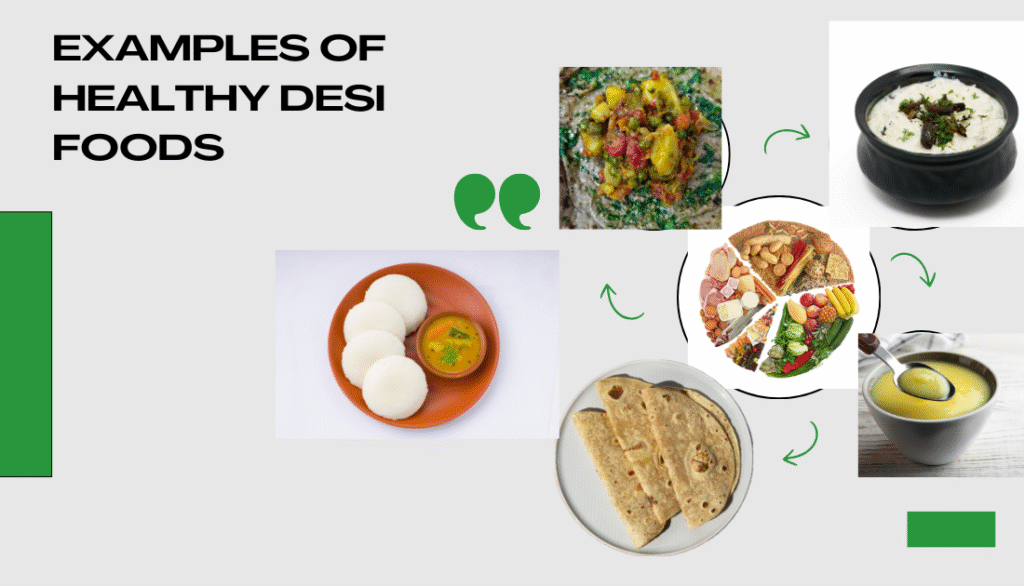
Examples of Healthy Desi Foods
- Dal + Rice + Ghee + Pickle – Perfect balance of protein, carbs, and good fats.
- Roti + Sabzi + Salad + Curd – A colorful plate full of vitamins and minerals.
- Idli + Sambar + Coconut Chutney – Light, fermented, and full of nutrition.
- Khichdi with Ghee – A healing comfort food, easy to digest and detoxifying.
- Buttermilk / Chaas – Natural coolant and digestive drink.
Modern Health Trends vs. Desi Food
Today, people spend money on superfoods like quinoa, chia seeds, or kombucha. But the truth is, our own rajma, millets, flax seeds, and chaas offer the same (if not more) benefits at a fraction of the cost. Desi food is not only nutrient-dense but also pocket-friendly and sustainable.
Tips to Make Your Desi Food Healthier
- Use cold-pressed oils and desi ghee instead of refined oils.
- Include millets (bajra, ragi, jowar) in place of only wheat or rice.
- Reduce deep-fried snacks, enjoy steamed or roasted options.
- Add a portion of raw salad or sprouts daily.
- Keep sugar and packaged foods minimal – choose jaggery, dates, or honey for sweetness.